What the angler needed for a river day
The brief came from a keen local angler in Pietermaritzburg who fishes rivers and smaller flowing water where you spend more time walking than standing still. The main goal was simple: cut down on bulk, keep the kit comfortable for a full day on foot, and make sure the landing side of things was sorted before the first cast. He wanted less drag from heavy clothing and tackle, especially when moving over slippery banks and uneven ground.
We looked at the type of water he fishes, the usual bank access and the fact that river work often means long stretches between bites. That meant a kit with enough reach and control for the water, but not so much weight that it becomes tiring by mid morning. The client also asked for gear that would handle muddy launches, wet grass and the odd unexpected splash, which is pretty normal around the Midlands after rain.
- Location: Pietermaritzburg, KwaZulu-Natal
- Fishing style: river and mixed freshwater use
- Main need: better mobility with lighter carry weight
- Weather concern: damp banks and cool early starts
Why we changed the setup
River fishing rewards movement, so we recommended a more practical combination instead of a heavy all-round loadout. The old approach had too much bulk for walking sections and made it harder to stay balanced when crossing wet ground. By scaling back the line weight and choosing waders that fit properly, the whole setup became easier to wear and manage through the day.
The lighter line choice was not about going fragile. It was about matching the presentation to the water and reducing fatigue when casting repeatedly. In slower pools and moderate current, the right line diameter can still give good feel and enough strength for normal river work, while making the rod feel quicker in the hand. We also made sure the net was the right size for the fish likely to be encountered, with a frame that would not snag badly on branches or reeds.
- Lighter line for easier casting and less drag
- Waders selected for walking comfort and wet-bank use
- Net sized for controlled landing in tight river spaces
- Balanced kit for shorter rests between spots
What we supplied for the Pietermaritzburg river setup
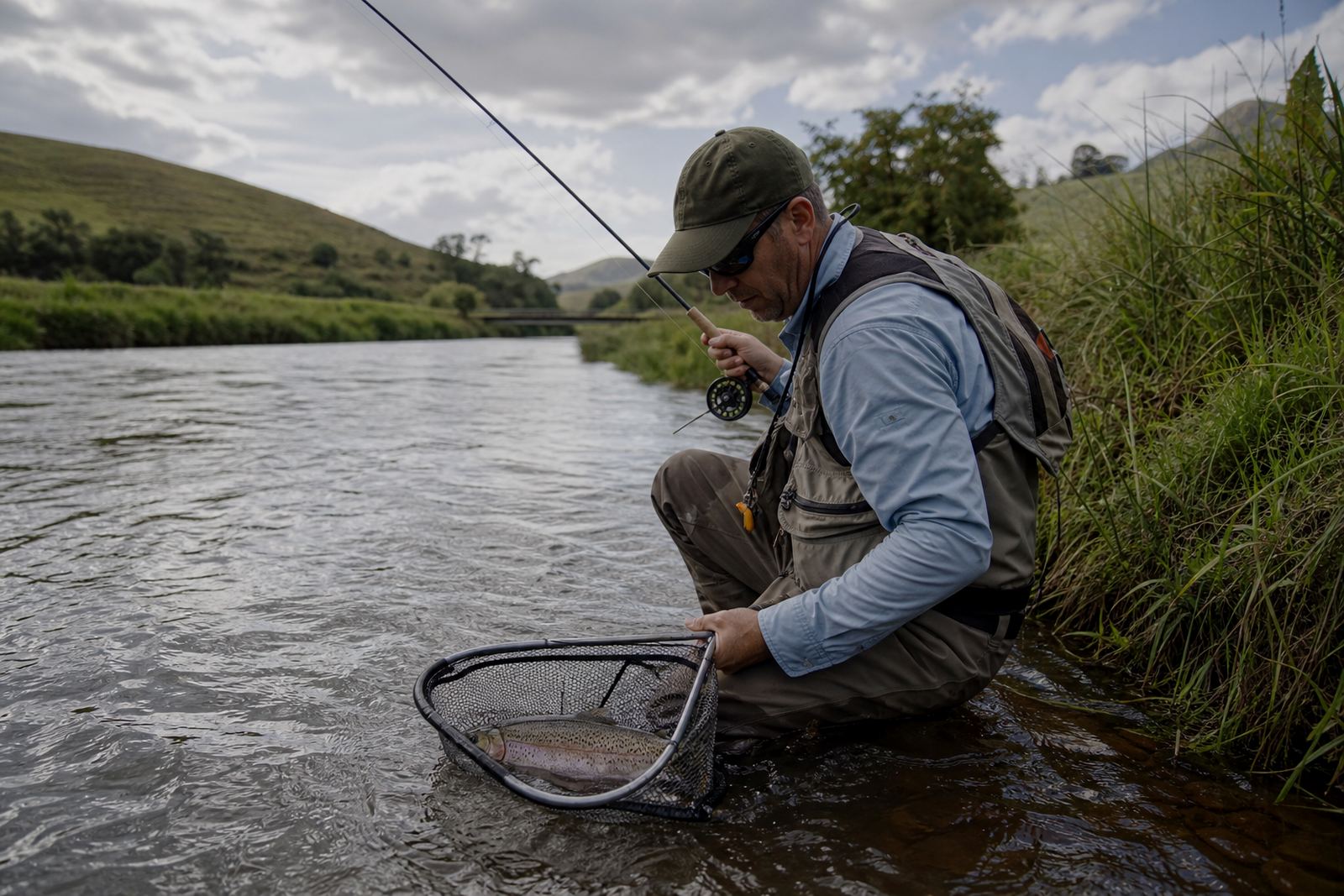
For this project we supplied chest waders, a landing net and a lighter main line matched to the rod and reel already in use. The waders were chosen for practical river movement, with enough room for layering in cooler weather and good coverage for splash protection. The net had a manageable handle length for reaching over reeds and rocks, and the mesh was selected to be kinder on fish scales during release.
The line change was the part that made the biggest immediate difference. We set the spool up with a thinner, smoother line suited to the client’s river conditions and tied in a leader section that gives a bit of extra abrasion resistance where needed. Jason also checked the reel drag and line lay so the new setup would run neatly under pressure. That saved a lot of fuss later, because a poorly spooled reel can turn a good day into a headache very quickly.
- Chest waders for shallow wading and bank access
- Landing net with practical handle length
- Main line reduced for better casting feel
- Leader section added for abrasion-prone water edges
- Reel checked for drag smoothness and line lay
How we handled the fitting and tuning work
We worked through the setup step by step rather than handing over the gear loose and hoping for the best. First we checked the fit of the waders to make sure they sat properly over footwear and allowed movement at the knees and hips. Then we spooled the reel carefully, keeping tension even so the line packed down cleanly. That matters more than people think because line twist and loose wraps usually show up at the worst time, often when a fish is already on.
After spooling, we tested the leader knot, checked the rod guides for wear and made sure the net handle sat comfortably in the hand. The client also asked about bait handling and river-side carry, so we gave a few simple notes on how to keep the net and waders tidy in the vehicle, especially when coming back from a wet session. A clean bagged kit lasts longer and smells better too, which is worth saying plainly.
- Fitting check on waders before the handover
- Even spooling to avoid twist and loose wraps
- Guide check to reduce line wear on the river
- Carry advice for wet returns and vehicle storage
Timeline from first chat to ready-to-fish kit
The project ran over one week from enquiry to collection. Day one was the needs discussion and kit assessment. By midweek we had the gear selected, line measured and spool work done. The final check and handover were completed before the weekend so the client could get onto the water without delay. For a fishing setup, that is a sensible turnaround and it left enough time to answer the usual small questions before the trip.
Because the angler already had a serviceable rod and reel, we did not need to rebuild the whole outfit. That kept the timeline short and the cost sensible. It also meant we could focus on the parts that really affect river movement and fish handling rather than spending time on items that were already working fine. Small changes, done properly, often give better results than a full swapout.
- Week 1: brief, selection and setup planning
- Midweek: spool work, knotting and checks
- End of week: handover and final advice
- Total turnaround: 1 week
What changed on the water and what we would repeat
The result was a cleaner, lighter river kit that made the angler feel less bogged down on the bank. The waders gave him more confidence when moving through damp grass and shallower edges, while the net made landing fish quicker and neater. The lighter line improved casting feel and reduced the effort needed across a long session, which is exactly what a river day should do for you. He said the setup felt more natural almost straight away, and that is often the best sign that the gear matches the fishing.
If we were doing the same project again, we would follow the same process. Start with the water conditions, look at how far the angler walks, then build the kit around comfort and control. For Pietermaritzburg river work, that means practical waders, a sensible net and line chosen for the actual current and structure. No need to overcomplicate it. Just keep the setup light enough to move, and strong enough to do the job. That balance is what keeps a river day enjoyable, not tiring.
- Better mobility between river sections
- Cleaner fish landing with less handling time
- More comfortable casting through the day
- Same process would suit similar river trips around KwaZulu-Natal
Key facts
| Client type | River angler from Pietermaritzburg |
|---|---|
| Project timeframe | 1 week |
| Main items supplied | Chest waders, landing net, lighter main line |
| Service work | Reel check, line spooling, leader fitting |
| Fishing use | Freshwater river sessions with mixed bank access |
| Result | Lighter, easier-to-carry setup with better mobility |